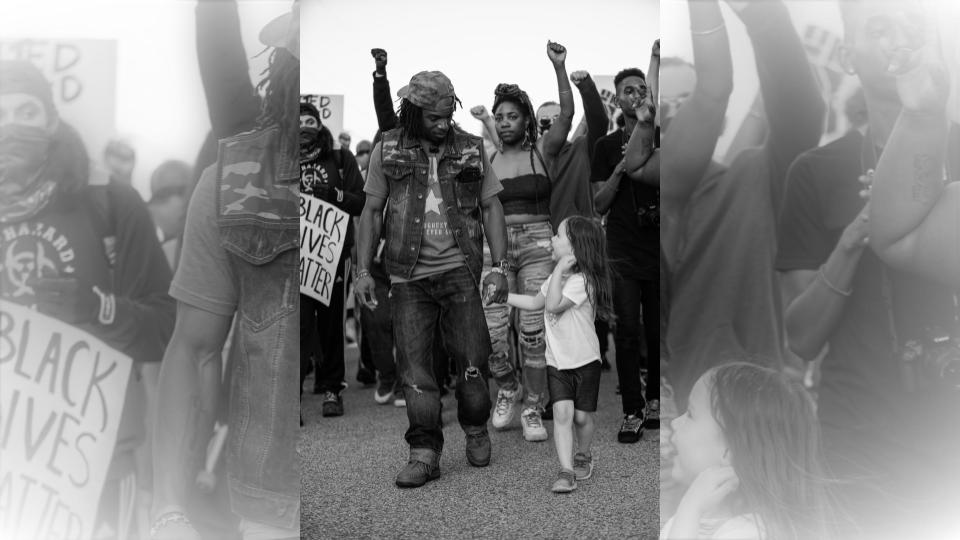
Fighting for social justice is hard. It’s emotionally exhausting and fraught with pitfalls — uncomfortable dialogues and conflicts, frequently not getting it quite right despite best intentions, encountering emotional fragility in ourselves and others, and running into compassion fatigue. It is the work of sitting with trauma, ours and others’, personal and intergenerational, long and often.
Such experiences often breed compassion or judgment, which can quickly grow out of balance to one another. This sometimes creates a paradox that I’ve observed in activists, myself included:
Social justice is best when our judgment is only as strong as our compassion, and our compassion matched by judgment.
I should pause and clarify what I mean by “compassion”. It differs from empathy or having to agree with an opposing point of view. Compassion means having the capacity to entertain an idea without necessarily accepting it, having sufficient empathy and wisdom to understand where it’s coming from, and feeling compelled to help make a difference.
Brené Brown captures the essence of this balance between compassion and judgment when she speaks of having a “strong back and a soft front.” My children’s fifth grade teacher also calls it “kindness with courage.” It’s the same idea: be kind and curious, but with the integrity and courage to stand up for what you believe in. Be courageous and resolute, but from a place of curiosity and love, not fear or anger. Be resolute but compassionate.
The diagram below is a framework I propose to reflect on this and where you and others may be on the journey towards advocating for social justice.
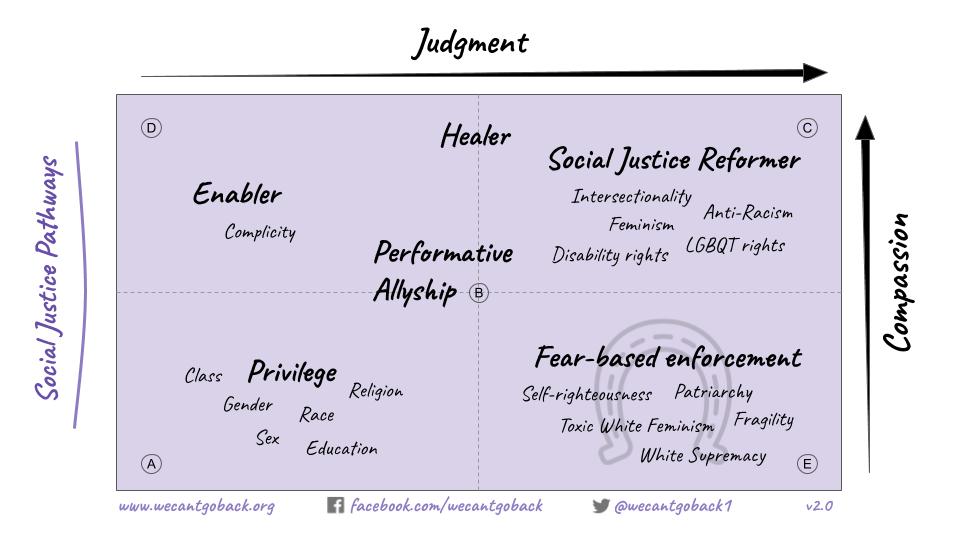
Some of us are actively moving from privilege (A) to performative allyship (B). Reading, sharing memes, protesting, and donating to causes on occasion are all positive steps on the personal journey towards advocating for social justice.
With additional compassion, wisdom, courage, and integrity, one can become a more engaged reformer (C). This requires a sustained commitment to self-care, continuous learning, bravely confronting the issues publicly and privately even when it’s uncomfortable, and becoming personally invested in the outcome even when issues fall out of the public eye. Perhaps even especially when they fall out of the public eye.
Others are deep with a solid understanding and compassion (D) but unsure of what to do, perhaps tired and fearful of stepping further into the fray. But silence can be complicty and risks enabling further systemic violence. If you find yourself in this position, at least consider being a healer by letting folks impacted by injustice know that you see them, that you empathize with the injustice they’re facing, and that you can hold space for their trauma even if it backwashes on you.
Finally, some will find themselves pursuing fear-driven enforcement behaviors (E), advocating for their beliefs but in echo chambers with defensiveness, self-righteousness, and insufficient curiosity for what they are doing. This is the path I’ve occasionally found myself on (and still do) whenever I get too contemptuous of the intransigence of the far right. But activism lacking compassion reifies authoritarian power structures reminiscent the horseshoe theory instead of creating more compassionate, just, and equitable value systems.
The path towards social justice is winding and different for everyone depending on where they are today. It’s a continuous journey, not a destination. May we all pursue it with greater kindness and courage.
 We Can't Go Back
4 thoughts on “Pursuing Social Justice with Kindness and Courage”
Comments are closed.