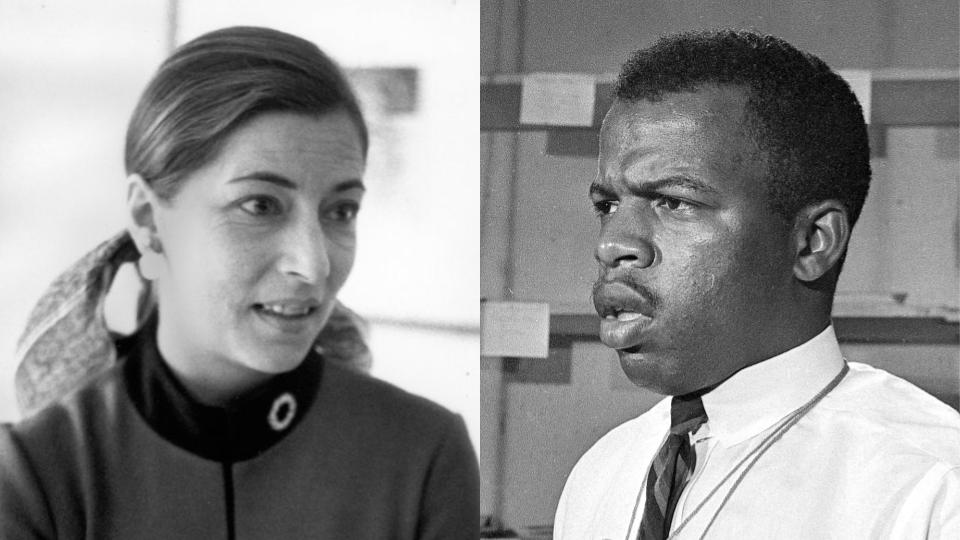
Ruth Bader Ginsburg wasn’t a legislator, but did more to write the law than anyone in recent memory. Her arsenal was the 14th Amendment, in which all people are entitled to equal protection under the law. It was a simple message that was hard fought one court case at time, and Ruth Bader Ginsburg was at the helm of so many of them. Her work is best known for advancing women’s rights, but also laying the groundwork for a more thoughtful, comprehensive legal awakening around gender and LGBTQ rights. She will be sorely missed.
What I did not know until she died is how she did this. What strikes me in reading about her life is how she was able to build bridges that seem inconceivable today. She had a way of speaking truth to power that was simultaneously respectful and considerate of where they were coming from, but she was no doormat either. She did not win her court cases by raging against old white men on the Supreme Court as so many of us are wont to do today, but by outfoxing them and bringing them into the wisdom and humanity of her arguments. She did not win her nomination to the Supreme Court by an unheard margin of 96-3 by dodging questions about abortion or pandering to one ideology over another, but by speaking plainly about what she believed and why. And she did not dissent with the conservative branch by demonizing others, but by articulating her values and honoring the humanity inherent in everyone — even to the extent of maintaining a personal friendship with the late Antonin Scalia. She was simultaneously, authentic and principled and compromising.
It is difficult to imagine such a warrior having much success today.
Her passing, like that of John Lewis before her, seems to reflect the evolution of one style of leadership from people who were strong in their principles but clever in how to bring that about in favor of one that is louder but less effective. We, the people, make it very difficult for our leaders today to be principled and compromising. We are not interested in independent thought, except when it reflects our own. We make it difficult for others to be of their own mind, or to act in ways that are not in perfect alignment with how we expect them to be. To demonstrate that they are sufficiently principled, we demand that our leaders be uncompromising, righteous, and quick to find fault with the other side. Anything less, we brand as inauthentic and weak.
But strength of character does not come from how well one’s views aligns with our own, It comes from how well it aligns to their own integrity, particularly in the face of populist pressure to conform with groupthink.
Ruth Bader Ginsburg was quiet and reserved. But she was also anything but weak. She won not because she raged but because she articulated her points in ways that resonated with others, including those who would not normally be on her side. I hope our next Supreme Court nominee be allowed to follow in her footsteps, whatever their politics may be. But for that to happen, we need a President who shares such values, a Congress who insists upon them, and an electorate who cares more for strength of character than ideological purity.
 We Can't Go Back